

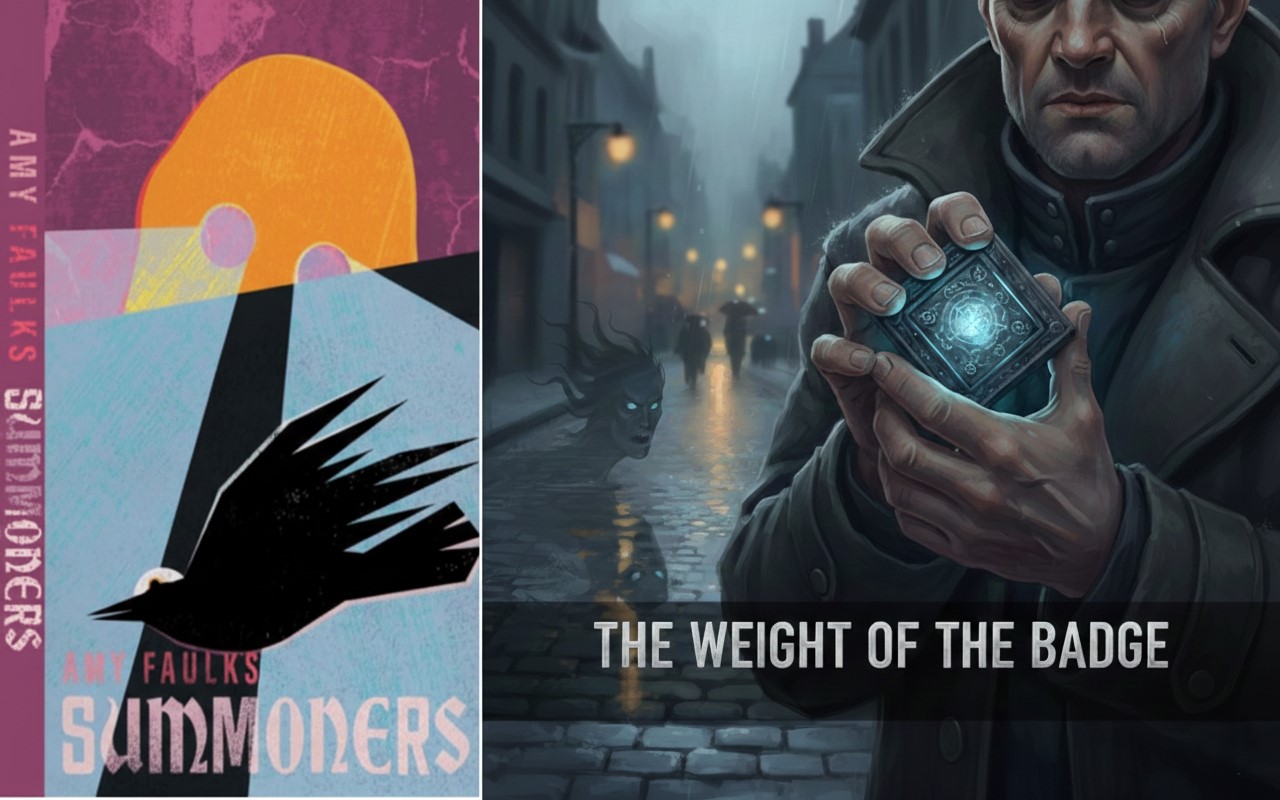
Amy Faulks’s SUMMONERS is a fantasy book that focuses a lot on work that doesn’t get a lot of attention. This book is different from most fantasy stories because it focuses on people whose job it is to keep society running smoothly. The story shows how survival often depends on people who work behind the scenes by using the role of Executors.
In the world of SUMMONERS, death does not always mean peace. When someone dies, their spirit may stay behind. Some spirits fade away on their own, but others stay around because they are confused or angry. If they aren’t led away, these spirits can hurt people who are still alive. This ongoing threat affects how society is built and kept up.
The city relies on Executors to handle this risk. Executors are trained professionals whose job it is to help spirits move on after they die. Their work keeps things from getting out of hand and keeps life and death in balance. The systems that keep the city safe would break down without Executors.
Executors are not heroes to be praised. They don’t want attention or praise. People don’t often see what they do. Most people benefit from what they do, even if they don’t fully understand it. By making this choice, SUMMONERS shows how often people forget about how important work is.
The book is about Terry Mandeville, an Executor who has been doing his job for a long time and takes it very seriously. Terry really believes in rules and order. He knows that making mistakes at work can kill people. Because of this, he is disciplined and emotionally stable in his role.
Being an Executor is a big part of who Terry is. He gets a sense of purpose from following the rules and keeping things in order. He thinks that having structure keeps people safe from fear and doubt. Terry doesn’t think that control is the same as power. It’s about being responsible.
Terry can do his dangerous job because he believes this, but it also limits him. He doesn’t let his feelings get in the way of his work or his relationships with other people. He thinks that feelings can get in the way of duty. This way of thinking helps him stay alive, but it also keeps him from seeing how much the system hurts people.
Every day, executors have to deal with a lot of stress. They deal with death all the time and have to stay calm even when they are sad. They are expected to act right away, even if it hurts or is personal. One of the hidden costs of keeping order is this emotional burden.
Amy Faulks uses the role of Executors to show how systems depend on people who are willing to take on a lot of responsibility. Executors are supposed to put the safety of others ahead of their own comfort. They need to do their jobs, but they are hard on them.
Terry meets the spirit of a man named Whip, which changes the course of the story. Whip acts differently than other spirits. He is still aware, alert, and unwilling to fade away. His spirit doesn’t get led away; instead, it becomes tied to Terry.
This unexpected bond messes up Terry’s abilities and makes him feel like he has no control. He can’t do his job like he used to. He no longer thinks or acts alone. Terry’s beliefs about his role as an Executor are put to the test by Whip’s presence.
Whip is a different part of the system. He lived outside the law in life. His experiences have given him a point of view that is shaped by loss and being left out. He doubts that systems that say they protect everyone are fair. His voice makes Terry face harsh truths.
SUMMONERS looks at the limits of duty through Terry and Whip. Executors are taught to follow the rules, but what happens when they don’t? What happens when the system makes things worse instead of better? The book doesn’t give simple answers.
As Terry’s relationship with Whip gets worse, the bigger system starts to break down. The Veil that keeps the city safe is getting weaker. There are small signs of failure, and fear spreads. This threat shows how much society relies on its systems.
Magic and long-standing rules hold up the Veil. It keeps a lot of spirits at bay and lets life go on as usual. People believe it without a doubt. But as it gets weaker, the hidden costs of this dependence become clear.
Executors are under more and more pressure. People expect them to fix problems that come up when systems break down. Their workload gets bigger, and so does the stress on their emotions. The book shows that systems often put the most pressure on the people at the bottom.
This crisis makes people think about the past. A long time ago, strong magic was used to make the systems that control spirits. The Witch Queen, Iris Westheide, is at the heart of this story. Her knowledge helped make the rules that Executors now follow.
Calling on the Witch Queen’s spirit might help fix the Veil. But what she did in the past helped and hurt her. This problem makes the characters think about whether the old ways of doing things still work.
Amy Faulks shows that magic is something that needs to be taken care of and handled with care. Rituals need planning, focus, and skill. Mistakes can have bad effects. This method strengthens the idea that power must be used with care.
The way SUMMONERS is written supports its themes. The story is easy to follow because the language is clear and simple. Character experience is used to explain complicated ideas instead of long explanations.
The book doesn’t build tension through big battles; instead, it does so through responsibility and pressure. Characters have to make hard choices that don’t always have the best results. This makes the story more real and easy to understand.
Terry’s journey shows how much work goes unseen. He is not trying to get stronger. It’s about knowing that systems depend on people and that people have limits. He has to decide how much he can carry as the pressure builds.
The presence of Whip adds to this theme. His life and death show how systems meant to keep society safe can miss people. The book asks if order can really be fair without understanding through him.
These ideas are also seen in the city itself. The way it works, the rituals it has, and the way it protects itself show that it is a society based on fear and compromise. The Veil is a sign of safety that comes from making sacrifices.
Amy Faulks’s SUMMONERS is mainly about work that is kept secret. It shows how important it is for people to work quietly and take on a lot of responsibility in order to survive. It makes readers think about who pays the price for safety.
Readers who like fantasy with strong themes and characters will find SUMMONERS to be a thoughtful book. It mixes magic with important questions about duty, responsibility, and work that isn’t seen.
Amy Faulks’s SUMMONERS reminds readers that systems don’t work just because of magic. They work because people are willing to do the work.